Tanzanite: The Rarest Blue in the World
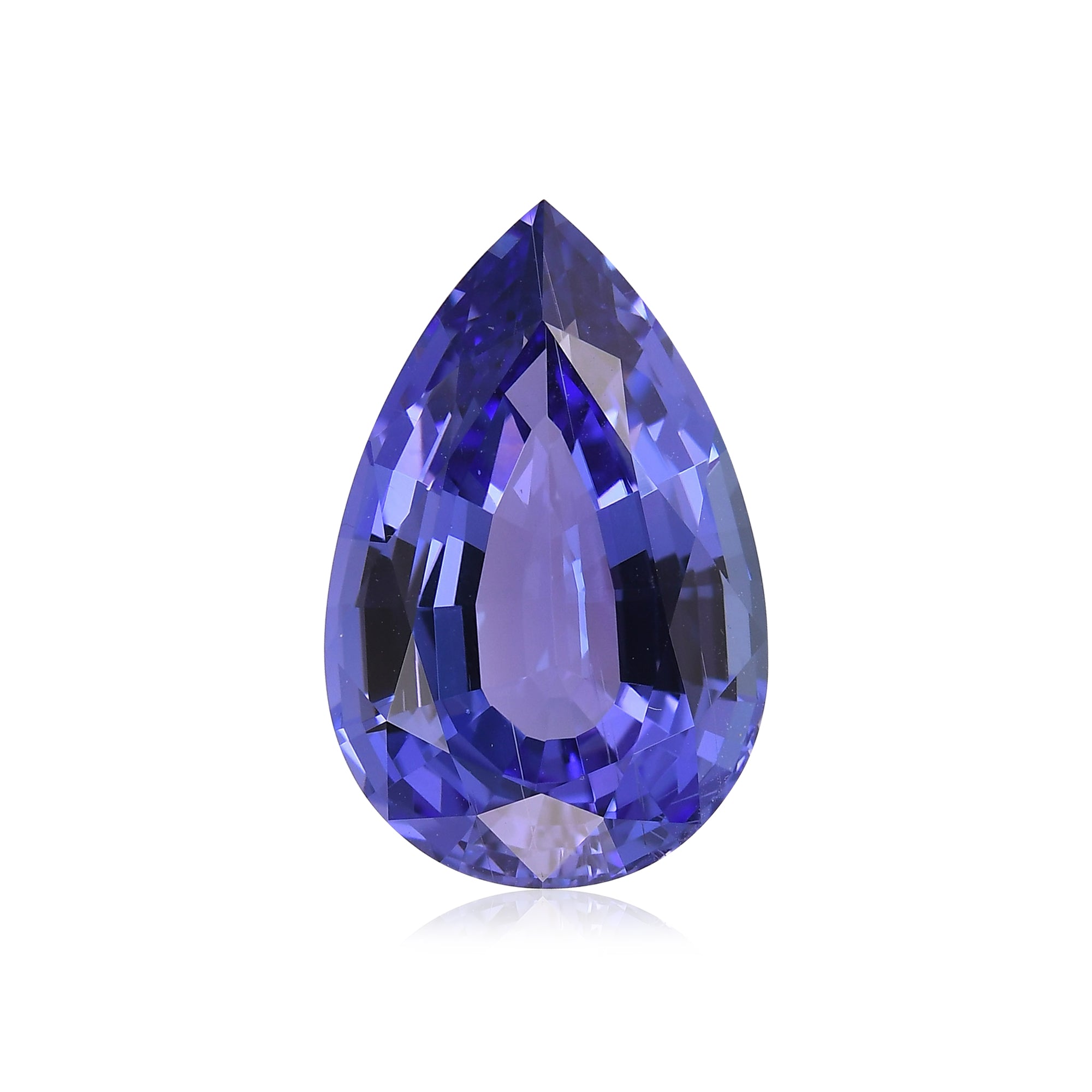
Tanzanite occupies a unique position in the gemstone world: found in only one place on Earth, in declining supply, with growing global demand. For investors, these factors create a compelling long-term case. For buyers, the stone's extraordinary blue-violet color — which shifts dramatically with lighting — makes it one of the most beautiful gems available at any price point.
A Single Source: The Merelani Hills
Tanzanite is a variety of the mineral zoisite found exclusively in a 5-kilometer stretch of the Merelani Hills at the base of Mount Kilimanjaro in northern Tanzania. This geographic singularity makes tanzanite categorically different from other colored gemstones: when the Merelani deposit is exhausted, no new tanzanite can be sourced from anywhere on Earth. Geologists estimate remaining productive mine life at 20–30 years, though the pace of depletion has accelerated with improved mining equipment.
The Tanzanite Foundation has stated that tanzanite is 1,000 times rarer than diamond — a statistic reflecting strictly limited geographic occurrence rather than absolute volume at any given time.
Trichroic Properties: Three Colors in One
Tanzanite belongs to the orthorhombic crystal system and exhibits a phenomenon called trichroism — the ability to display three distinct colors when viewed along three different crystal axes. In the rough state, tanzanite appears brownish-red from one angle, blue from another, and violet from a third. Heat treatment eliminates the brown component, leaving a stone that alternates between intense blue and violet depending on the viewing angle and light source.
This color shift is a defining characteristic of fine tanzanite — in daylight, the stone appears richly blue; under incandescent light, it shifts toward a warmer violet-purple. Buyers who prize this dynamic quality are rewarded with a stone that appears different every time they look at it.
Heat Treatment: Universal and Accepted
Unlike sapphires where unheated stones command premiums, tanzanite's situation is fundamentally different: essentially all commercial tanzanite is heat treated, and this is universally understood and accepted by the trade. Raw tanzanite crystals are typically brownish — heat treatment at approximately 400–700°C for 30 minutes permanently converts the brown component to the blue-violet color the market knows. An "unheated" tanzanite would simply be brownish-red. No premium exists for unheated tanzanite.
The AAA–A Grading System
The industry grades tanzanite on a three-tier system:
AAA (Top Grade): Deep, intensely saturated blue-violet; no visible inclusions; excellent cut.
AA (Commercial Fine): Medium-dark blue-violet; minor inclusions; well-proportioned cut.
A (Commercial): Lighter color; visible inclusions; standard cut quality.
For investment, focus exclusively on AAA quality. The visual difference between A and AAA is dramatic; the price premium is often less than expected at smaller sizes, making AAA the obvious value choice.
Investment Case: Finite Supply, Growing Demand
Tanzanite's investment argument is elegantly simple: the mine is depleting, supply will eventually reach zero, and demand from Asian markets — particularly China and India — has grown significantly since the stone's introduction to Western markets by Tiffany & Co. in 1967. Tanzania has also progressively restricted rough export to encourage domestic beneficiation, further constraining supply to international buyers.
Larger stones — 5ct and above — are disproportionately valuable because the rough yield of large, fine-quality tanzanite is minimal relative to demand. Per-carat prices jump significantly at the 5ct, 10ct, and 15ct thresholds.
What to Look For When Buying
Prioritize AAA color depth — the blue-violet should be immediately visible without needing to move the stone. The body color should show no significant brown or gray modifiers. For investment, target 5ct+ with GIA certification as a minimum; for top-tier investment, seek dealers specializing in tanzanite grading. Always request video in both daylight and incandescent lighting to observe the trichroic color shift — a characteristic that should be clearly visible in fine material.
Interested in Tanzanite?
Browse our current selection of certified natural tanzanite gemstones.
VIEW CATALOG