Muzo vs Zambian Emeralds: A Buyer’s Guide
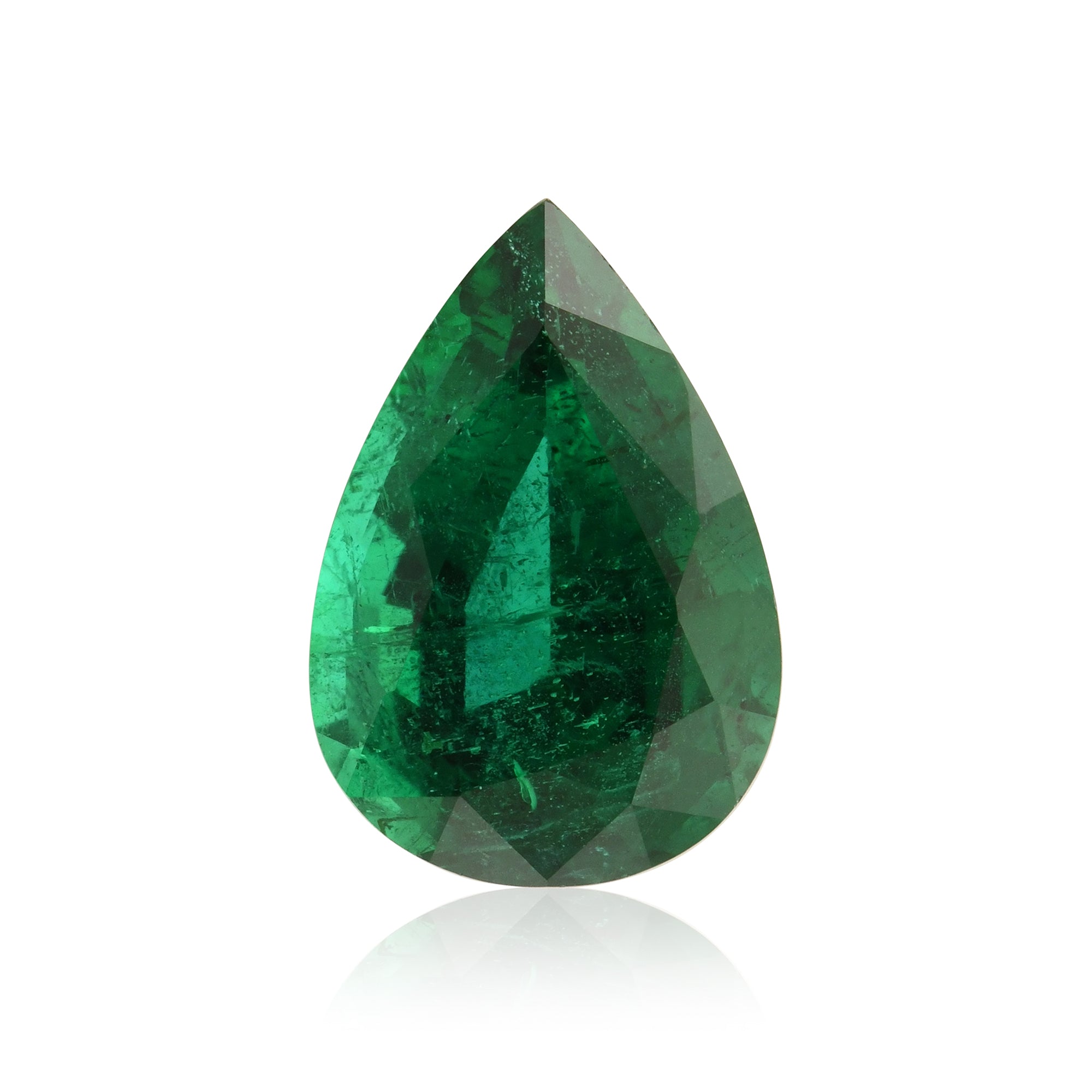
Emeralds are among the most complex gemstones to evaluate. Unlike sapphires or rubies where a few parameters dominate value, emerald buying requires understanding origin, inclusion character, and the nuanced world of clarity enhancement. This guide covers the essentials for buyers at every level.
Colombia: The World's Emerald Capital
Colombia accounts for approximately 70–90% of the world's fine emerald production, with three great mining districts defining the market's quality benchmark: Muzo, Chivor, and Coscuez.
Muzo, in the western Andes cordillera, produces the archetypal emerald — a warm, intense, slightly yellow-green that the trade describes as "grass green" or "emerald green" at its finest. Muzo emeralds often show exceptional inner life, partly a function of their characteristic fluorescence under long-wave UV light. Among the three Colombian origins, Muzo consistently commands the highest premiums and the most collector interest.
Chivor emeralds show a distinctly cooler, bluer-green tone. They tend to have fewer inclusions than Muzo stones, which can be advantageous for clarity, though the cooler color is generally less prized than Muzo's warmth. Coscuez produces emeralds across a wide quality range.
Muzo Emerald Certification
The "Muzo Emerald" certification from Muzo International — the company holding the Muzo mine concession — provides mine-of-origin verification for stones from their specific operation. This certification has gained meaningful market acceptance and adds a provenance layer beyond standard origin determination by gemological laboratories.
Zambia: The Kagem Mine
Zambia's Kagem mine, one of the world's largest emerald operations, produces stones with a distinctly different character from Colombian material. Zambian emeralds are typically darker, with a more saturated blue-green hue. They often show excellent transparency and fewer inclusions than Colombian equivalents. The price gap between top-quality Zambian and Colombian emeralds has narrowed considerably in recent years as the market has come to appreciate Zambian quality on its own terms.
Other Origins
Brazil produces emeralds from the Itabira district, generally lighter in color. Ethiopia's Habesha deposits have produced some fine emeralds but supply is inconsistent. Afghanistan's Panjshir Valley yields emeralds that can approach fine quality but market accessibility is limited. None of these origins consistently commands the premiums of Colombia or Zambia at equivalent quality.
The Jardin: Inclusions Are Expected
Emeralds are virtually always included — this is the nature of the mineral's geological formation. The characteristic inclusion landscape of an emerald is called a "jardin" (French for garden) and is accepted as proof of natural origin. An eye-clean emerald of fine color should actually be examined with suspicion — it might be synthetic or treated more extensively than disclosed.
Oil Treatment: The F-Scale
The vast majority of emeralds — estimates suggest 95–99% — have been treated with oil or resin injected into surface-reaching fractures to improve apparent clarity. Gübelin and GRS classify this treatment on a standardized scale:
F1 (None/Insignificant): No detectable treatment or trace amounts with no visual impact — the highest quality designation.
F2 (Minor): Minor amounts of filler present; acceptable for most buyers and not significantly value-impairing.
F3 (Moderate): Noticeable treatment; priced accordingly.
F4–F5 (Significant/Highly Significant): Extensive treatment; major value impact.
Investment-grade emeralds should be F1 or F2 maximum. F3+ stones are jewelry-grade, suitable for beauty but not serious investment.
Investment Grade vs Jewelry Grade
Investment-grade emeralds meet these criteria: Colombian origin (Muzo preferred), fine vivid green with minimal blue or yellow modifiers, F1 or F2 clarity enhancement per Gübelin or GRS, certification by Gübelin or GRS, minimum 3 carats. Jewelry-grade emeralds span a much wider range — purchased for beauty rather than appreciation potential. Understanding which category you are buying in is fundamental to making an appropriate purchase decision.